The Biggest Market in the World
The foreign exchange market — forex — is the largest financial market on Earth. Over seven trillion dollars changes hands every single day. To put that in perspective, the entire US stock market trades about five hundred billion per day. Forex is fourteen times bigger.
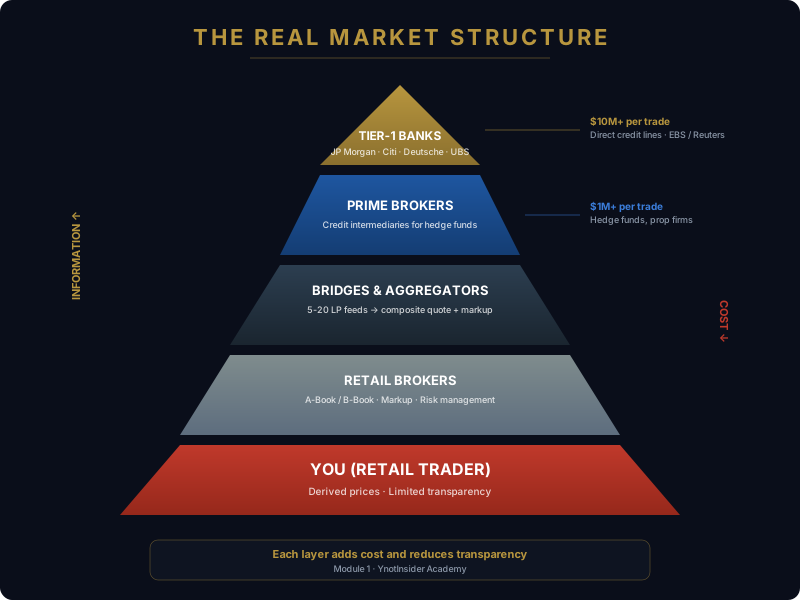
But unlike the stock market, forex does not have a physical location. There is no building on Wall Street where forex trades happen. Instead, it is a global network of banks, institutions, and traders connected electronically, operating twenty-four hours a day, five days a week. When London sleeps, Tokyo is trading. When Tokyo closes, New York opens. The market never stops.
So what exactly is being traded? Currencies. Every country has its own currency — the US dollar, the euro, the Japanese yen, the British pound. When you trade forex, you are exchanging one currency for another. If you think the euro will get stronger against the dollar, you buy euros and sell dollars. If you are right, you profit. If you are wrong, you lose.
This is not as exotic as it sounds. If you have ever traveled abroad and exchanged money at the airport, you have participated in the forex market. The only difference is that professional traders do this electronically, in much larger sizes, and with the goal of profiting from small price changes.
Why should you care? Because forex offers something that most other markets do not: accessibility. You can start trading with as little as one hundred dollars. The market is open almost around the clock. And because currencies are always moving — driven by economic data, central bank decisions, and global events — there are always opportunities.
But here is the thing most people do not tell beginners: forex is also one of the most challenging markets to trade profitably. The same features that make it accessible — high leverage, twenty-four-hour trading, low barriers to entry — also make it easy to lose money quickly if you do not understand what you are doing.
This course is designed to give you that understanding. By the end of these four modules, you will know the language, the mechanics, and the mindset required to take your first steps as an informed trader.