Truth #1: You Are Trading Against Your Own Broker
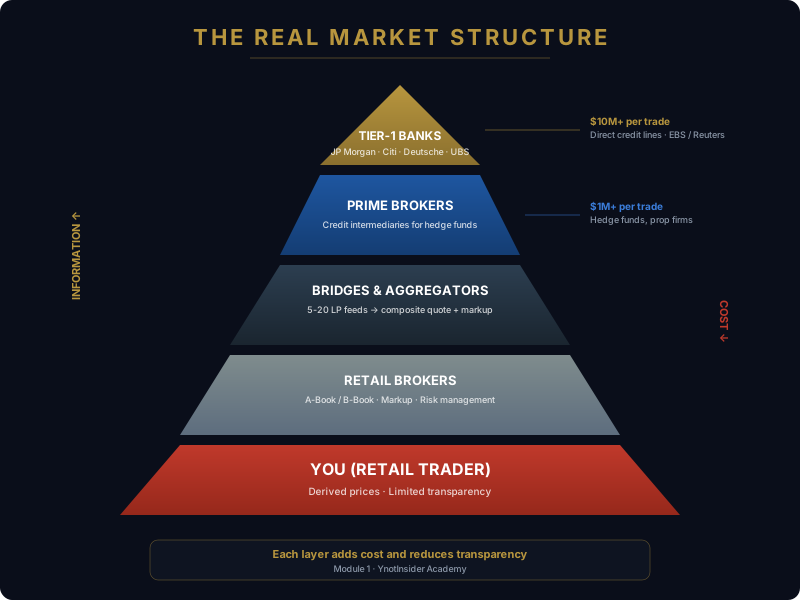
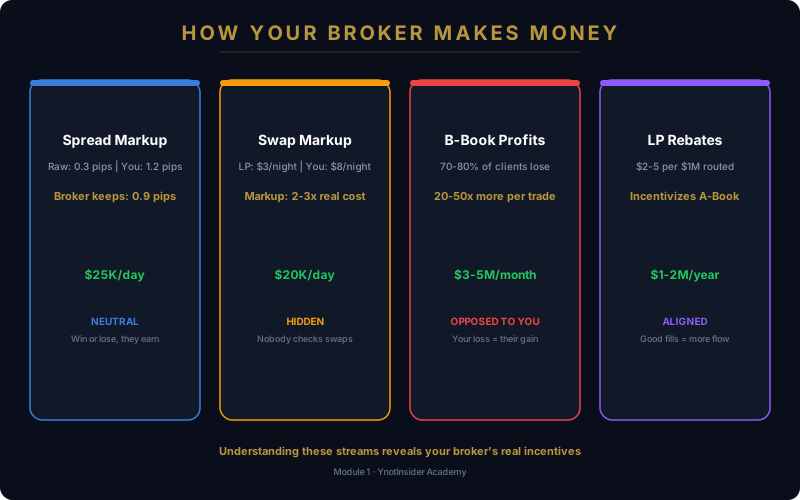
This is the fact that the forex industry does not advertise. When you place a trade with most retail brokers, your order does not go to the market. Your broker takes the other side of your trade. You buy, they sell. Your profit is their loss. Your loss is their profit.
This is called the B-Book model, and it is the dominant business model in retail forex. It is not illegal. It is not hidden — it is disclosed in the fine print of your broker's terms and conditions. But it creates a conflict of interest that most traders never think about.
Here is what this means in practice. Your broker has a monitoring system that runs around the clock. Every fifteen minutes, automated alerts calculate their total exposure — how much they stand to gain or lose based on all their clients' open positions. They know where the stop losses are clustered. They know which clients are overleveraged. They know, statistically, that seventy to eighty percent of their clients will lose money over time.
When seventy percent of clients are losing, the broker does not need to manipulate anything. They just need to be patient. Your losses fund their profits, their marketing, and their server costs. This is the architecture of the industry.
Does this mean you cannot win? No. But it means you need to understand the game you are actually playing. The first step to not losing money is understanding where the money goes when you lose it — and it goes directly to your broker's bottom line.
I know this because I have worked on the infrastructure side of brokerage operations — building the risk monitoring systems, configuring the B-Book alerts, analyzing the execution data. The insider perspective is not conspiracy theory. It is operational reality.
In the full YnotInsider course — The Hidden Architecture of Forex — I go much deeper into exactly how this system works and, more importantly, how to navigate it to your advantage.